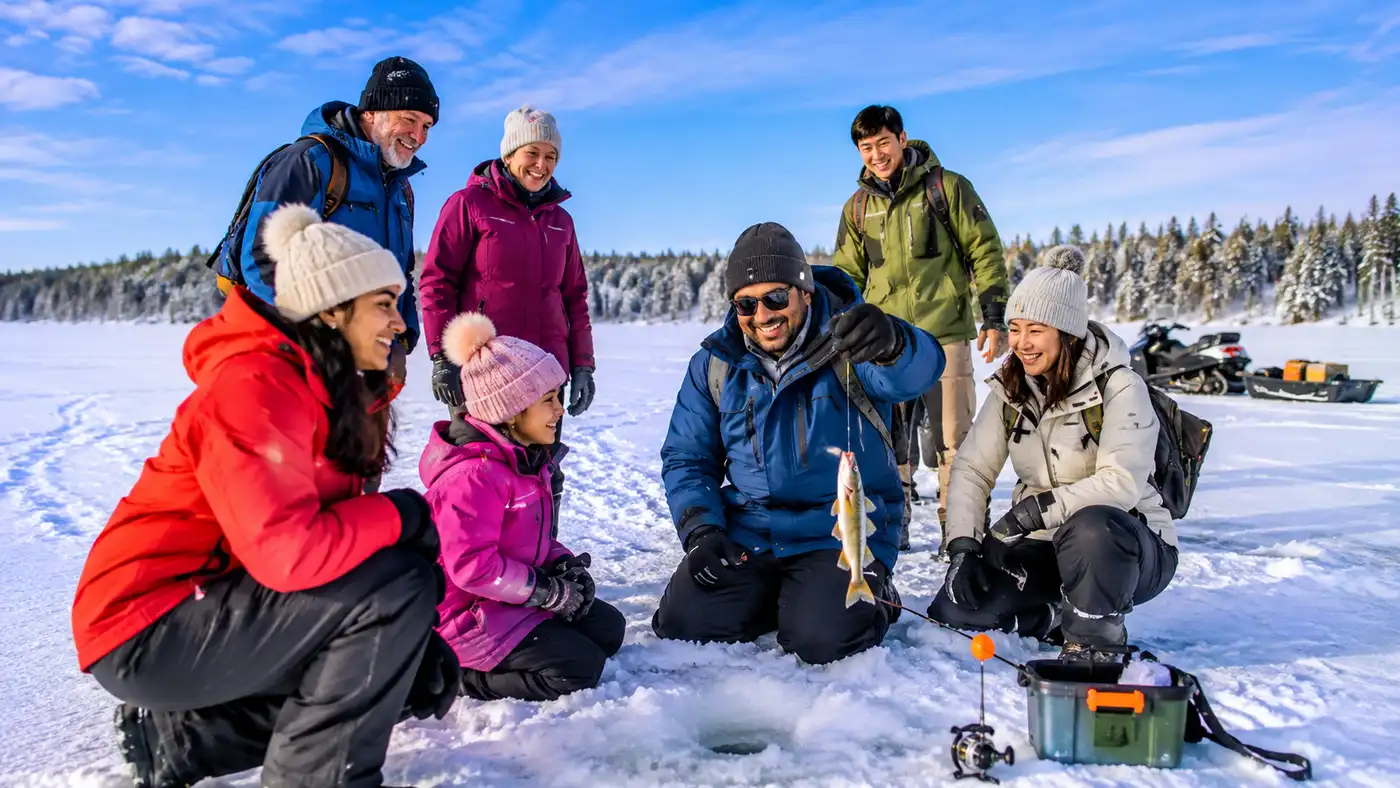
Lapland Ice Fishing Holiday Guide: Seasons, Costs, and Tours
The silence out on a frozen northern lake catches you off guard. You step off the snowmobile track, your boots sinking six inches into dry powder, and suddenly the only sound left in the world is your own breathing rattling inside a thermal balaclava. Most people booking a lapland holiday with ice fishing imagine sitting around on a frozen lake with a thermos while trophy trout leap onto the snow. Real life in the Arctic circle plays out a bit differently, though sitting over an eight-inch hole drilled through solid blue ice while the pale winter sun scrapes the birch tops is still one of the best things you can do with a pair of insulated mittens.
Planning this kind of trip takes some unglamorous groundwork. You need to know which month brings enough daylight to actually tie a lure, what gear an outfitter should hand you, and whether a budget day tour offers anything beyond a frostbitten thumb. Here is the ground truth on costs, seasons, tackle, and tour styles across the Finnish north, gathered from real days spent drilling through four feet of slush and ice.
Book your ice fishing rovaniemi experience:
When to Plan Your Trip: The Ice Fishing Season in Finland
Winter arrives early above the Arctic Circle. Lakes around Muonio, Kittilä, and Ivalo begin skimming over in late October, but you cannot walk on them safely until mid-November. The real ice fishing season in Finland kicks off in December, though December brings the kaamos, the polar night. The sun does not rise above the horizon for weeks. You fish in eerie twilight between 10:00 and 14:00, peering down into black water while your guides light kerosene lanterns. It feels magical for about two hours. After that, minus 28 Celsius seeps straight through your wool socks.
March and April are genuinely better.
By late March, daylight stretches past twelve hours. The sun bounces off the vast white expanses of Lake Inari, warming your face even when the air temperature sits stubbornly at minus 8. Arctic char and perch wake up from their midwinter torpor and start hunting actively along the drop-offs. If your heart is set on long, comfortable days on the ice, hold out for the spring crust. In Finnish Lapland ice fishing peaks when the snow hardens enough that you can walk across lakes without snowshoes, usually from the third week of March through late April.
Pro tip: Bring polarized sunglasses with amber or bronze lenses for late-season trips. The spring glare reflecting off miles of untouched Arctic snow will give you a blinding headache within 45 minutes without proper eye protection.
May is tricky. The ice often stays thick enough to support a truck well into the first week of May on northern waters, but the shoreline edges rot first. Getting onto the lake becomes a wet gamble involving planks and waders, which is strictly local territory and not something you want on a holiday.
Finland Ice Fishing Tackle and Techniques
You do not need heavy ocean rods out here. The gear for under ice fishing in Finland looks absurdly delicate when you first pick it up. A traditional Finnish jigging rod, known as a pilkkivapa, is essentially a lightweight piece of molded plastic twelve inches long, fitted with a flexible fiber tip and an integrated foam spool. You hold it with your bare fingertips inside an open mitten, gently twitching a small metal lure three feet off the mud bottom.
Finnish Lapland ice fishing relies heavily on two main setups:
- Vertical balance jigs (tasapaino): Small lead minnows fitted with single hooks front and back and a tiny treble hook underneath, worked with sharp wrist snaps to glide horizontally through the strike zone.
- Scented pilkki spoons: Cupped brass or copper flashers tipped with a short monofilament dropper leading to a size 12 hook baited with live red bloodworms (chironomid larvae) or maggot clusters.
- Hand augers (kaira): Spiral steel drills, typically 115mm to 155mm in diameter, with razor-sharp Swedish or Finnish curved blades that chew through three feet of hard lake ice in under 30 seconds.
If you join a basic guided afternoon outing, your guide will hand you a pre-rigged spool spooled with light 4-pound monofilament. You kneel or sit on an insulated reindeer hide, lower the lure until it taps the lakebed, wind it up three turns, and begin a slow, hypnotic rhythm of twitches and pauses. Bites often feel like nothing more than a wet leaf brushing your line. You do not strike hard like a bass fisherman; you just sweep your forearm upward smoothly to set the hook.
Note: Never set an ice drill down flat on the snow or let the blades hit gravel along the shore. A single ding against a submerged pebble ruins the cutting edge, turning a ten-second drilling job into an exhausting twenty-minute struggle.
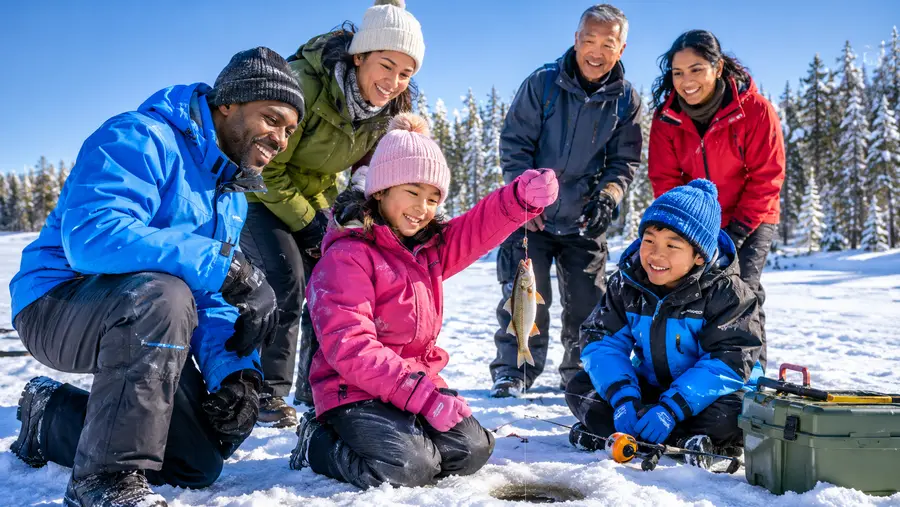
The True Cost of Ice Fishing in Finland
Budgeting for an Arctic angling getaway can swing wildly depending on how independent you want to be. The legal side is surprisingly generous. Under Finnish public rights of access, basic hand-line pilkki fishing with an un-spooled jigging rod requires zero fishing licenses anywhere in public waters. If you rent a remote wilderness cabin, buy a $19 hand auger and a $7 plastic rod from the local K-Citymarket, you can legally fish every public lake in Lapland for nothing. Most travelers do not take this route because you need snowmobiles, local knowledge of currents, and winter survival gear.
Here is what real ice fishing trips in Finland cost across typical holiday setups:
| Experience Type | Typical Price (EUR) | Duration | What Is Included |
|---|---|---|---|
| Standard Lake Tour (Group) | €85 - €115 | 2.5 - 3 hours | Thermal suit, boots, basic tackle, hot berry juice, shared guide |
| Snowmobile & Ice Fishing Combo | €155 - €210 | 4 - 5 hours | Snowmobile rental, fuel, thermal gear, tackle, open-fire sausage lunch |
| Private Wilderness Expedition | €380 - €550 | Full day (7 hrs) | Dedicated guide, tracked sled transport, fish cleaning, gourmet camp lunch |
| DIY Gear Rental (Local Shop) | €35 - €45 | 24 hours | Hand auger, insulated seat bucket, two rigged rods, scoop, tackle box |
The cost of ice fishing in Finland jumps quickly once you factor in private snowmobile transit. Gas is expensive in the far north, running around €2.15 a liter at village pumps. If a tour takes you thirty miles out to an untracked wilderness lake where Arctic char actually live, you are paying for the fuel and the guide's maintenance hours on the machines. It is worth paying extra for smaller groups. A group of fifteen tourists shuffling around three holes makes enough surface vibration through the ice to spook perch for two hundred yards around.
Book your ice fishing rovaniemi experience:
Choosing the Best Lapland Tour with Ice Fishing
If you search online for an ice fishing tour in Finland, ninety percent of the results will place you on an organized minibus leaving Rovaniemi. These trips usually drive twenty minutes to a frozen lake right behind a residential road. You drill one hole, hold a rod for forty minutes, drink lukewarm blueberry juice around an iron fire pit, and get driven back to your hotel. If you have small children who get cold easily, that might be fine. If you actually want to experience wild ice fishing lapland finland style, book your base further north.
Look into operations centered around Levi, Lake Inari, or the fells of Utsjoki. Our comprehensive guide to Lapland ice fishing destinations breaks down how regional lake depths and species change as you push north toward the Barents Sea. A proper lapland tour with ice fishing should take you well away from highway hum, across frozen bogs where you might see willow grouse exploding out from snow drifts.
Ask these questions before handing over your credit card:
- Transport method: Are you riding snowmobiles, riding behind a snowmobile in a wooden sled sledge, or walking straight out of a van park?
- Target species: Are you jigging for small wild perch, or do they stock a pond with farmed rainbow trout to guarantee photo catches?
- Shelter availability: Does the operator provide a heated wooden kota (teepee) or a pop-up thermal tent if the Arctic wind kicks up to thirty knots?
- Catch preparation: Will the guide show you how to gut, fillet, and pan-fry your catch over birch wood right on the ice?
A good lapland trip with ice fishing should feel unhurried. You want to spend at least two full hours working holes at different depths rather than snapping a selfie and running back to a warm van.
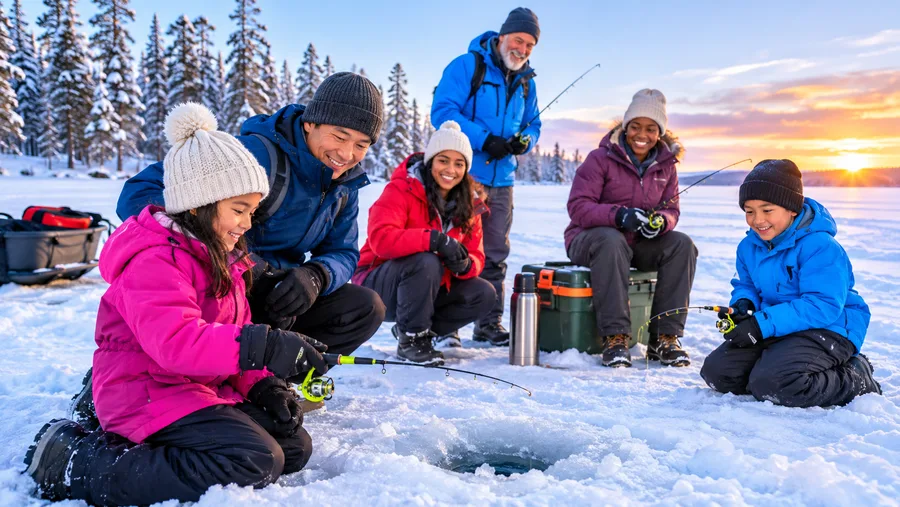
What Catching Fish in the Far North Actually Feels Like
You will probably catch European perch first. They are stunning fish, striped like small tigers with bright vermilion pelvic fins that look incredible laid against fresh snow. In Finnish, they call perch ahven, and they make the sweetest chowder you will ever taste. On deeper waters like Inari, you are hunting lake trout, whitefish (siika), and the elusive Arctic char (nieriä), which has a belly the color of an October sunset.
Patience here is physical. You learn to listen to the ice groan. As the temperature drops mid-afternoon, the lake ice contracts, sending deep resonant booms echoing across the water beneath your boots. It sounds like artillery fire or thunder ripping through the floor. It is terrifying the first time you hear it, but your guide will not even blink. It just means the ice sheet is three feet thick and freezing harder.
Keeping warm requires active discipline. Once cold sets into your heels from the ice sheet, your day is basically finished. Most outfitters supply thick wool felt socks and heavy-soled Sorel or Baffin boots, but you need your own merino base layers underneath. Never wear tight boots. Your toes need air pockets to circulate heat. If your toes feel compressed when you lace up, you will be miserable within twenty minutes.
Frequently Asked Questions about lapland holiday with ice fishing
Do I need an angling license for an ice fishing holiday in Finland?
No, provided you are using a standard simple jigging rod with a single line and lure. Under Finnish everyman rights (jokamiehenoikeus), pilkki ice fishing is free on public lakes. If you use active reels, tip-ups, or fish managed whitefish waters, you need the standard national fisheries management fee, which costs about €16 for a seven-day pass.
Can children handle an ice fishing trip in Finnish Lapland?
Yes, but keep it short. Children over age six generally love operating the hand auger and scooping slush out of holes with plastic skimmers. However, sitting still on a lake at minus 15 Celsius drains small bodies fast. Choose a tour that includes access to a warm wilderness hut or heated tent with open fires.
What happens to the fish you catch on a guided tour?
If you catch fish of legal size, most guides will bleed and gut them immediately, frying them on a skillet over an open birch fire with butter, salt, and rye bread. Any undersized fish are slid back down the hole into the water right away.
Quick Reference
- Prime months: March and April for mild weather and long daylight
- Standard group tour: €85 to €115 per person
- Target fish: Perch, pike, whitefish, Arctic char
- Legal permit: Free on public waters for traditional jigging
Book your ice fishing rovaniemi experience:
The Bottom Line on Booking
An Arctic ice trip is not for travelers who need five-star pampering every second of the day. Your nose will run, your hot chocolate will cool down in five minutes, and you might drill seven holes before finding a single school of perch tucked under a submerged rock bar. Yet when you pull that first golden perch through the green slush and watch the northern sky turn pink at three in the afternoon, nothing else feels quite like it. Skip the crowded city tours in December, aim for the deep snows of late March, and pack twice as many wool socks as you think you will ever need.
Read more about ice fishing rovaniemi.